Platform Literacy: the role of UX education in media literacy
How do adolescents experience and navigate the persuasive mechanisms built into social media, and what would it take to teach them the mechanism?
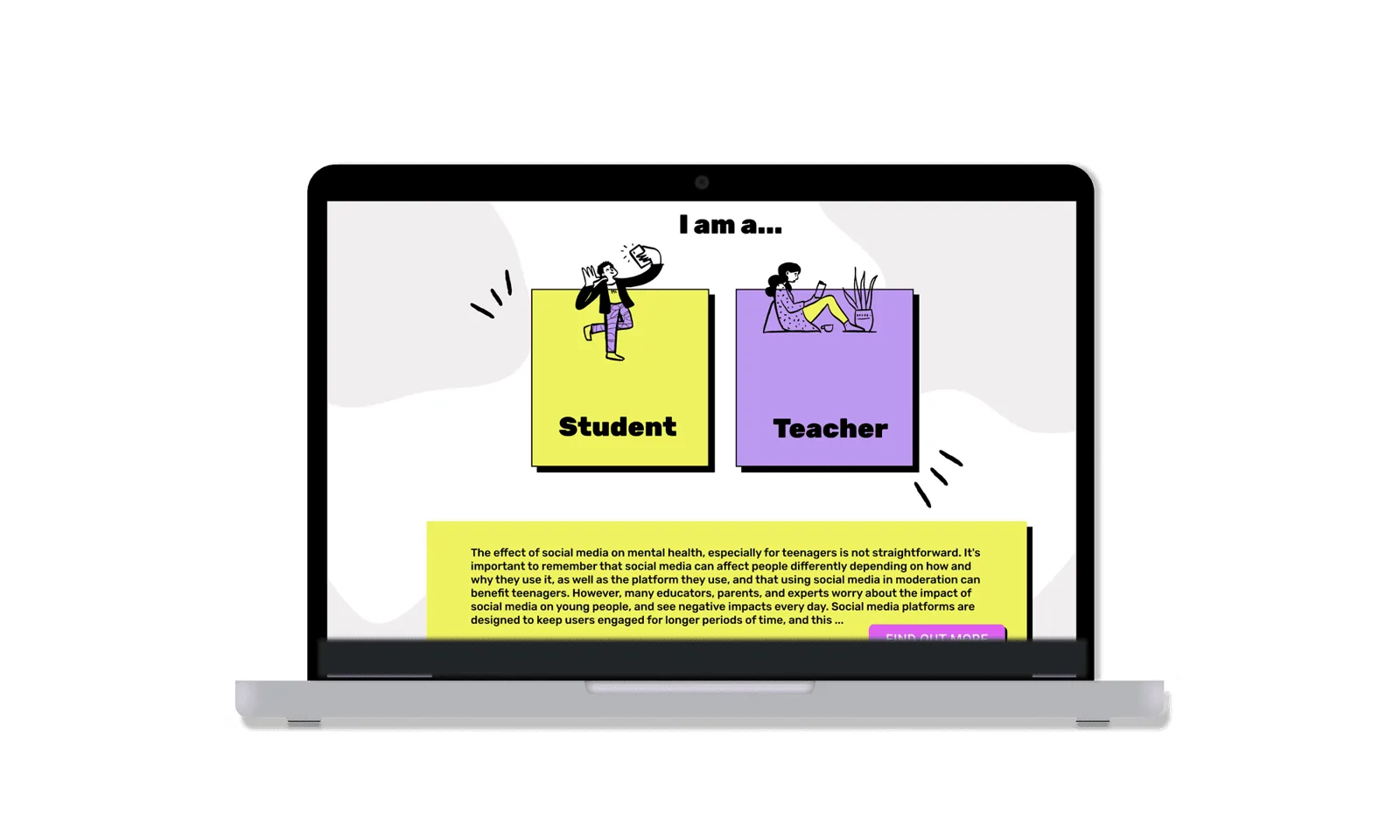
The Platform Literacy project examines how adolescents experience and navigate persuasive mechanisms embedded in social media platforms. It began as my honours thesis and continues as ongoing research.
This project investigates three things: how design features (algorithms, notification systems, interface patterns) shape perceived autonomy and critical awareness among teenagers; gaps in digital literacy frameworks, particularly for students with limited support at home and in lower-income contexts; and connections between algorithmic awareness, socio-economic factors, and children's rights (UNCRC Articles 13 and 17).
The project was initiated in response to consistent feedback from teenagers, educators, and carers: young people feel subject to, not in charge of, their digital environments. This lack of agency is intensified by a widespread gap in critical digital literacy. Most users, teachers, and parents are unfamiliar with the mechanics and psychology of platform design, and therefore ill-equipped to intervene.
All educational interventions are explicitly mapped to UNCRC Articles 13 and 17: enabling young people to identify and unpack algorithmic filtering, persuasive techniques, and the function of notification architecture; supporting students from lower-income households, who are underrepresented in digital policy work and most disadvantaged by the opacity of platforms; and encouraging critical literacy as a base for civic participation and digital autonomy, not as a one-off safeguarding task.
The analysis
Platform Literacy is a proposed framework for a blended educational experience aimed at 13 to 14 year olds. Developed through an honours project and ongoing academic research, this approach brings together secondary research, stakeholder interviews (with headteachers and educators), and persona and empathy mapping focused on the realities of underserved learners.
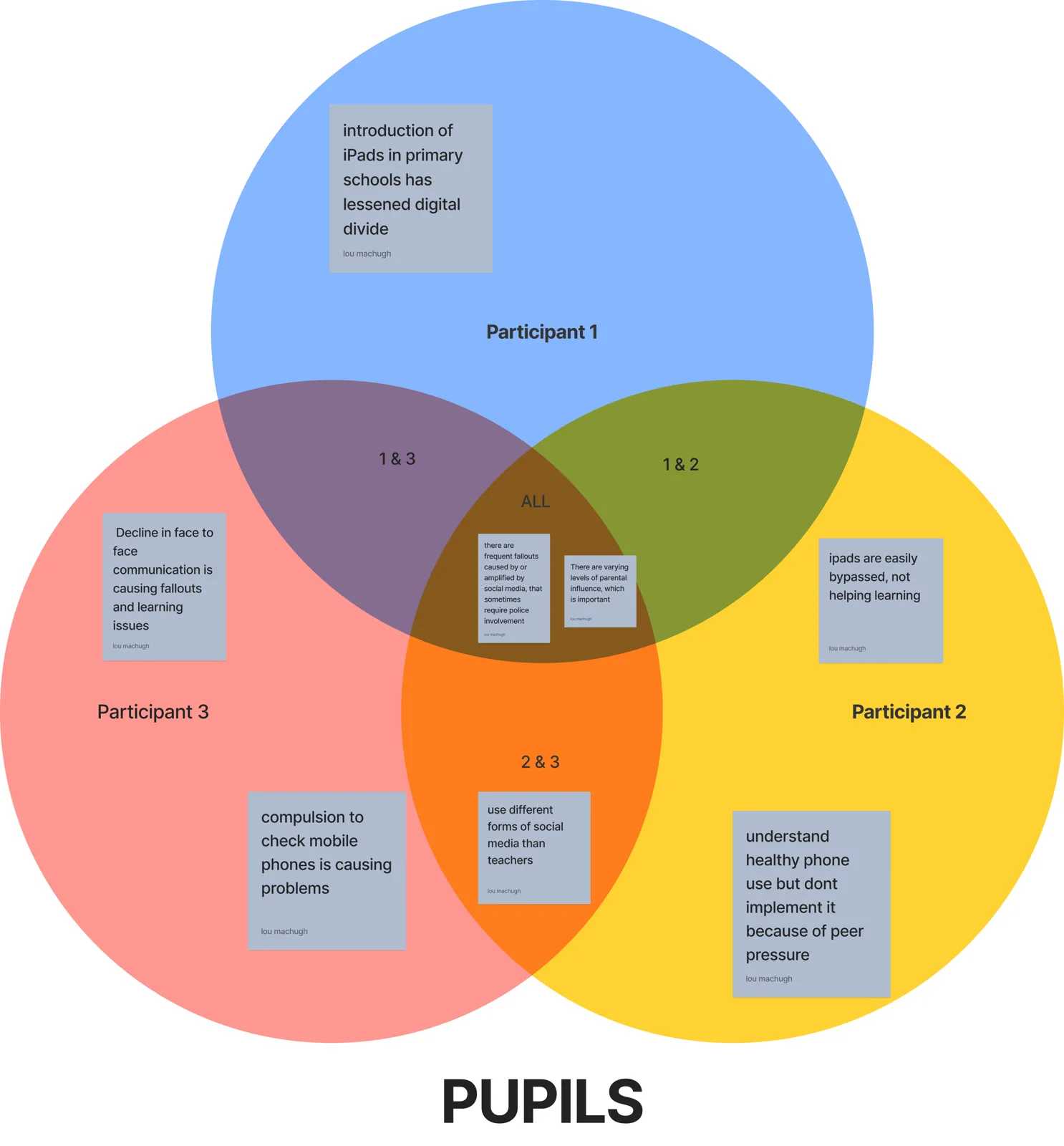
The early context work made three things clear. Digital exclusion is patterned across lines of income and resource: lower-income young people spend more time subject to platform algorithms and have less access to adult support. Existing digital detox interventions lack evidence and rarely tackle root structural influences or explain persuasive design. And there is a strong link between understanding of algorithmic systems and a sense of social and political efficacy online, supporting recent literature and UNCRC frameworks.
The design
The framework includes learning modules on persuasive design, algorithmic curation and critical digital literacy; activities that use Universal Design principles to ensure accessibility and adaptability for diverse learners; and resources for parents and teachers, informed by evidence, to raise algorithmic awareness and support children's rights.
Learners join their digital classroom as students and reflect on baseline behaviours, attitudes, and influences, their own and their household's. In the first activity, students dissect and annotate real social media feeds, identifying persuasive and manipulative features, supported by quizzes and immediate feedback. In the second, they work in teams to analyse a social media company's motivations, design choices, and the frictions between user and company interests. In the third, a filter bubble simulation, they experience alternative content feeds and compare these to their own, linking interface to information access and bias.
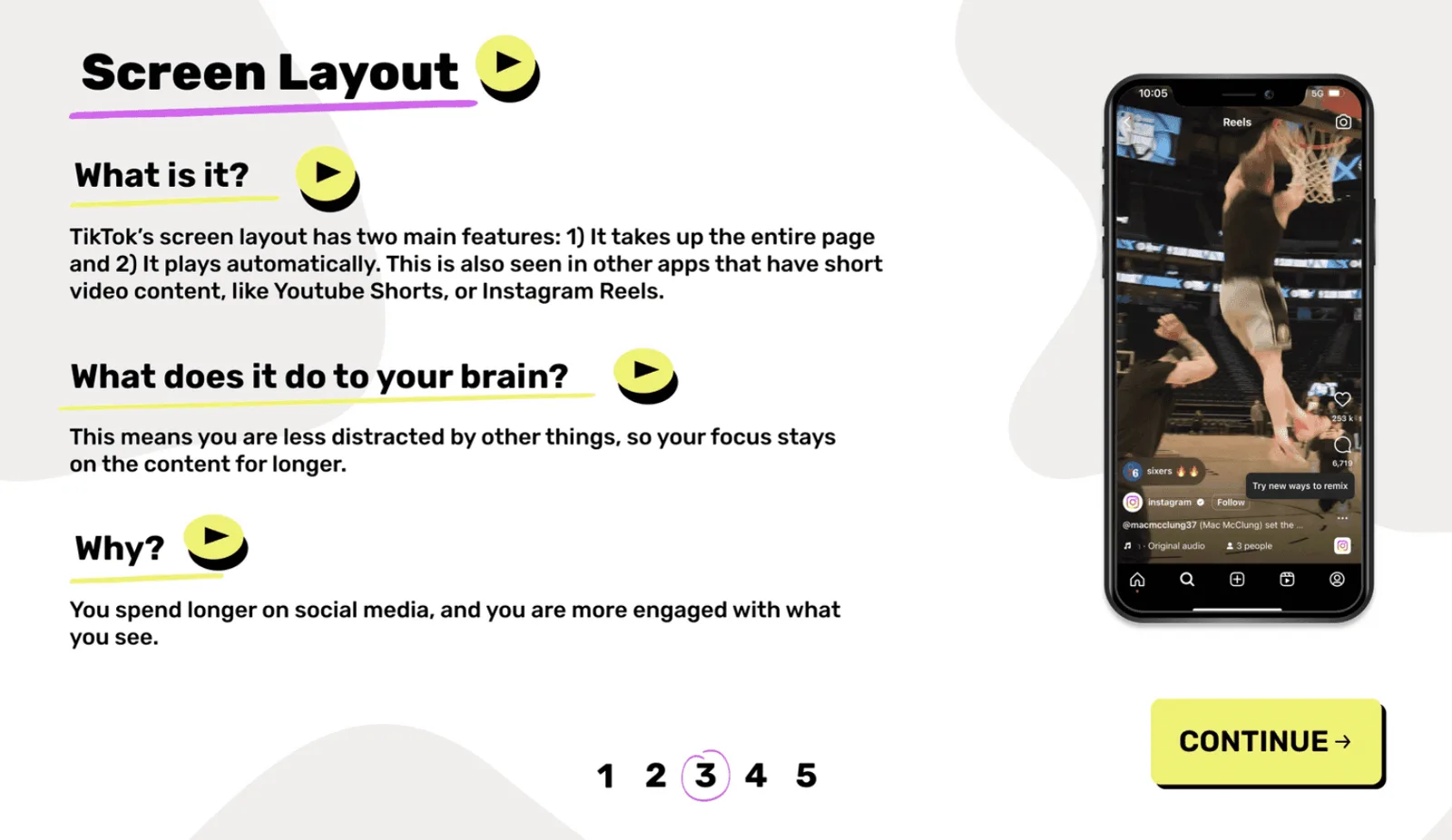
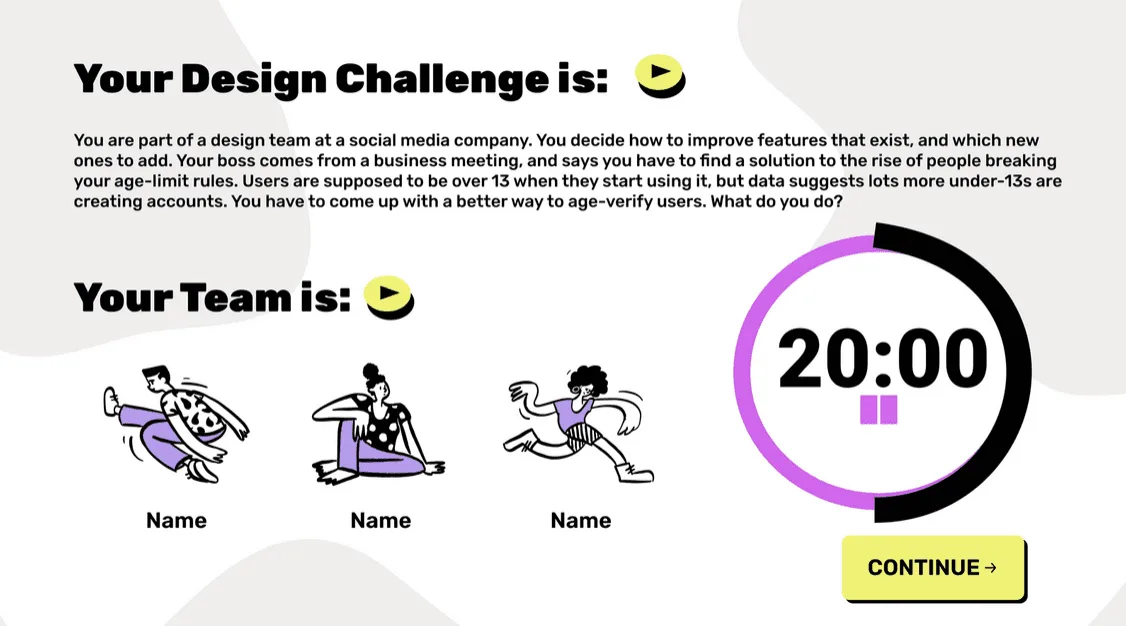
Multiple rounds of user testing led to concrete improvements: more inviting onboarding, visible About sections with student-driven calls to action, adjustments to interface elements to remove screen friction, and improved navigation for learners using assistive technology.
What's next
The proposed next phase turns the curriculum and research framework into something testable, responsive, and genuinely useful for young people and schools: refining the curriculum and interface with updated research and feedback; mapping the information ecosystem so connections are clear for learners and educators; shifting the definition of autonomy from individual to collective, building in social and civic perspectives; piloting a live classroom programme; recruiting collaborators and technical partners to build a functional platform; bringing in expert voices on misinformation, AI and online harm for new modules; and exploring life-centred and posthumanist design, plus small-scale AI tools, to help users see their habits and influence within digital systems.