Writing and video in public
Educational content online is popular, but people rarely act on what they learn. How do you make work that breaks that cycle?
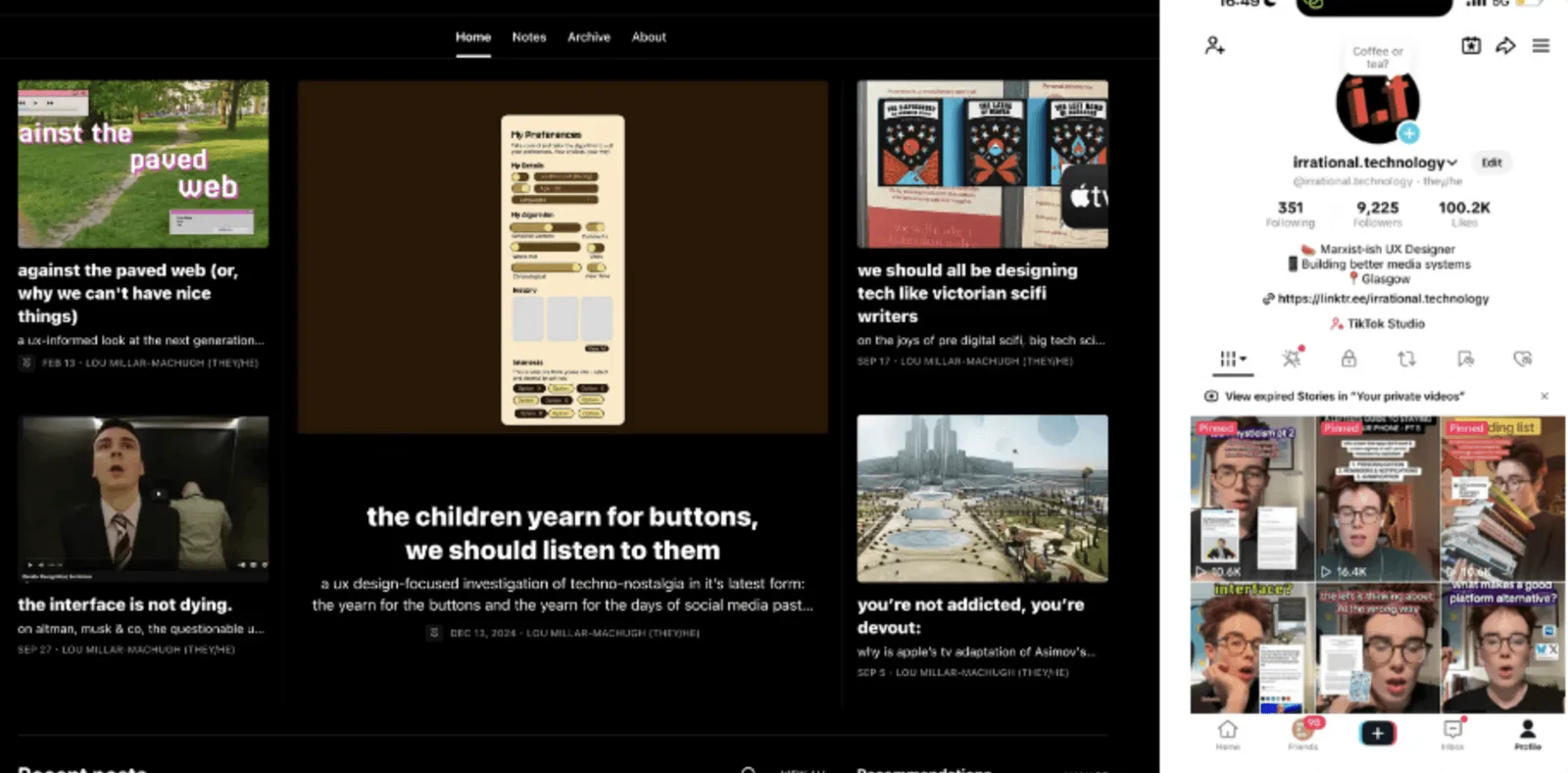
Since 2024 I've published essays and short videos that pull apart, interrogate and rewire the technological systems shaping everyday life. The main channels are Substack and TikTok, with collaborations and partnerships pushing the reach further.
The digital landscape is growing increasingly confusing and complex, and the dominant voices don't seem to care for user and community wellbeing. Most people have very little understanding of the sociopolitical and economic forces that shape these systems, and how design choices affect their experience of them.
Educational content online is very popular, but its efficacy is hotly debated. People feel informed, but rarely move towards implementing the ideas they learn online. My work is focused on breaking that cycle.
The analysis
Working with and for the communities and educators who value the work is key to it. I track alternative metrics, such as the share of meaningful comments, the number of saves, and the connections made with people and organisations interested in the work, as part of co-creating the direction of the project. These directly shape the topics I take on and how I tell them.
This comes from dropping the idea of the individual genius in favour of a clear sense of where my work fits in an ecosystem of change. Working that way has led to a part in the development of the Mindful Media Movement, artworks on artificial corporeality by Irma Besirevic, and several educational content initiatives online, including Pagemelt's video on being your own algorithm and Sluggish's Substack series on ADHD and technology.
The design
The work has built a growing audience of learners, educators and organisers who return to and reuse public resources, with an average of 15,000 monthly viewers and growing recognition from organisations in the field. It means:
- writing and publishing essays that break down design choices, algorithmic systems, and their everyday effects
- making public explainers, video guides and annotated resources that show how persuasive design works in practice
- collaborating with educators, technologists and creators to keep resources relevant to real-world problems
- prioritising accessibility, context and depth, so resources are made for saving, revisiting and using, not scrolling past
What's next
Next is more co-creation and more collaboration with local initiatives, bringing in offline educational and reflective experiences through workshops, exhibitions and collaborations in person. That matters because work that only reaches people already prepared to engage with educational content online limits who it can help.